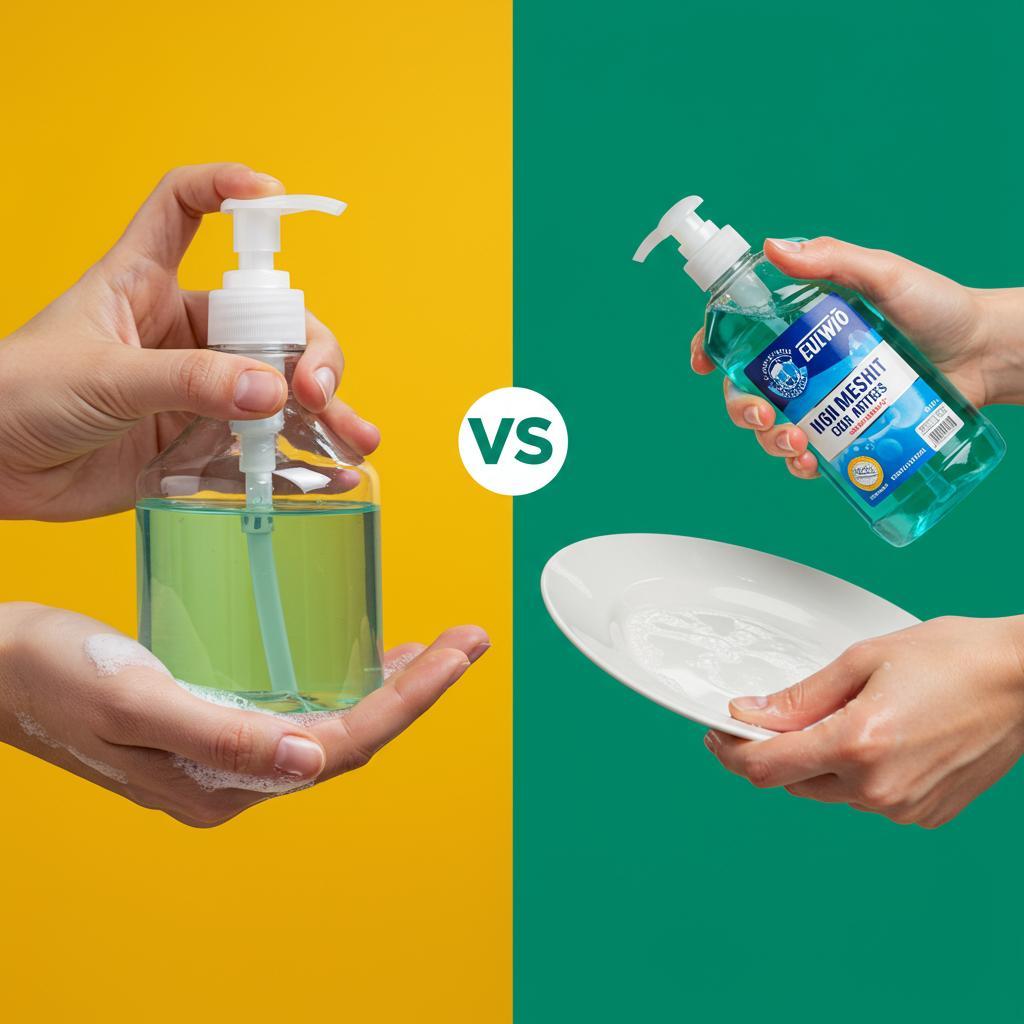
[Check Latest Arrivals hand soap vs dish soap on Amazon.]
# Hand Soap vs. Dish Soap: Which is REALLY Safe to Use Where?
We’ve all been there. You’re in the kitchen, hands covered in something sticky, and the hand soap is *right there*. The dish soap is also *right there*. Is it okay to just grab whichever is closest? Is there *really* a difference? And more importantly, are you potentially harming yourself or your family by making the wrong choice?
It’s a common question, and the answer isn’t as straightforward as you might think. This article dives deep into the world of hand soap vs. dish soap, exploring their ingredients, their intended uses, and what happens when you use them interchangeably. By the end, you’ll know exactly which soap to grab and when, ensuring your hands (and dishes) stay clean and safe.
[Explore Top Rated hand soap vs dish soap on Amazon.]
## The Hidden Differences: What Separates Hand Soap from Dish Soap?
While both hand soap and dish soap are designed to clean, their formulations are drastically different. These differences stem from the types of messes they’re designed to tackle and the surfaces they’re meant to clean. Think of it like this: you wouldn’t use a car wash to wash your face, right? The same principle applies here.
Hand soaps are formulated to be gentle on the skin, removing everyday dirt and germs without stripping away essential oils. Dish soaps, on the other hand, are designed to cut through grease and food residue on dishes, often containing harsh chemicals that can be damaging to the skin. Let’s break down the key components:
* **pH Levels:** Hand soaps typically have a pH closer to the skin’s natural pH (around 5.5), which helps maintain the skin’s moisture barrier. Dish soaps often have a higher pH, making them more alkaline and effective at dissolving grease. This higher pH, however, can disrupt the skin’s natural balance, leading to dryness and irritation.
* **Surfactants:** Both types of soap contain surfactants, which are molecules that help lift dirt and oil from surfaces. However, the surfactants used in dish soap are generally more aggressive, targeting stubborn food particles and grease. Hand soaps use milder surfactants that are less likely to irritate the skin.
* **Moisturizers and Emollients:** Hand soaps often include added moisturizers like glycerin, aloe vera, or shea butter to replenish moisture lost during washing. Dish soaps rarely contain these ingredients, as their primary focus is on cleaning power, not skincare.
* **Antibacterial Agents:** Some hand soaps contain antibacterial agents like triclosan or benzalkonium chloride to kill bacteria on the skin. While these ingredients can be effective at reducing germs, they can also contribute to antibiotic resistance and may irritate sensitive skin. Dish soaps sometimes contain antibacterial agents, primarily to prevent the spread of bacteria on kitchen surfaces.
[Explore Top Rated hand soap vs dish soap on Amazon.]
## Using Dish Soap on Your Hands: The Potential Problems
Now that we understand the differences in formulation, let’s explore what happens when you use dish soap on your hands. While it might seem like a convenient shortcut, regularly using dish soap as hand soap can lead to a variety of problems:
* **Dryness and Irritation:** The harsh chemicals in dish soap can strip away the skin’s natural oils, leading to dryness, itching, and flakiness.
* **Eczema and Dermatitis:** For individuals prone to eczema or dermatitis, using dish soap on their hands can exacerbate their condition, causing painful flare-ups.
* **Allergic Reactions:** Some people may be allergic to certain ingredients in dish soap, leading to rashes, hives, or other allergic reactions.
* **Weakened Skin Barrier:** Repeated exposure to harsh chemicals can weaken the skin’s natural barrier, making it more susceptible to infections and other skin problems.
* **Cuticles and Nail Damage:** Dish soap can dry out the cuticles, leading to cracking and peeling. It can also weaken the nails, making them brittle and prone to breakage.
While occasional use of dish soap on your hands might not cause significant harm, it’s best to avoid it whenever possible. If you must use it, be sure to rinse thoroughly and apply a generous amount of moisturizer afterward.
[Explore Top Rated hand soap vs dish soap on Amazon.]
## When *Can* You Use Dish Soap as Hand Soap? A Few Exceptions
Okay, so we’ve established that generally, dish soap is a no-go for handwashing. But are there any exceptions to this rule? Surprisingly, yes, although these situations are rare:
* **Extremely Greasy Hands:** If your hands are covered in grease that’s difficult to remove with regular hand soap (e.g., after working on a car engine), a small amount of dish soap can help cut through the grease. However, it’s crucial to rinse thoroughly and moisturize immediately afterward.
* **Removing Strong Odors:** Dish soap can be effective at removing strong odors from the hands, such as garlic, onion, or fish. Again, use it sparingly and follow up with moisturizer.
* **Emergency Situations:** In a situation where hand soap is unavailable and you need to clean your hands urgently, dish soap is better than nothing. Just be mindful of the potential side effects and use it only as a temporary solution.
Even in these situations, it’s best to use a small amount of dish soap diluted with water to minimize the potential for irritation. And remember, moisturizing is key!
[Explore Top Rated hand soap vs dish soap on Amazon.]
## Recommendations: Gentle Hand Soaps for Healthy Hands
Protecting your skin is important. When selecting a hand soap, look for products that are gentle, moisturizing, and free of harsh chemicals. Here are a few recommendations:
1. **Puracy Natural Liquid Hand Soap – Best Overall:** This plant-based hand soap is formulated with coconut-based cleansers, aloe vera, and vitamin E to gently cleanse and moisturize the skin. It’s free of sulfates, parabens, phthalates, and synthetic fragrances, making it a great choice for sensitive skin. It’s also available on Amazon.
* **Key Features:** Plant-based, sulfate-free, paraben-free, hypoallergenic, moisturizing.
* **Why We Like It:** Puracy’s commitment to natural ingredients and gentle formulas makes it a top pick for everyday handwashing.
2. **Dr. Bronner’s Pure-Castile Liquid Soap – Best Versatile Option:** This concentrated liquid soap can be used for a variety of purposes, including handwashing. It’s made with organic and fair-trade ingredients and is free of synthetic preservatives, detergents, and foaming agents. Available in various scents (or unscented), it’s easily found on Amazon.
* **Key Features:** Organic, fair-trade, versatile, concentrated, biodegradable.
* **Why We Like It:** Dr. Bronner’s is a fantastic choice because of its versatility and commitment to ethical sourcing. A little goes a long way!
3. **Method Gel Hand Wash – Best Budget-Friendly:** Method offers a range of affordable hand soaps in fun scents and stylish packaging. Their gel hand washes are made with plant-based cleansers and are free of parabens and phthalates. You can conveniently find Method on Amazon.
* **Key Features:** Plant-based, affordable, stylish packaging, paraben-free.
* **Why We Like It:** Method is great for those looking for an effective and affordable hand soap without sacrificing quality. The scents are an added bonus!
[Explore Top Rated hand soap vs dish soap on Amazon.]
## The Right Tool for the Job: Selecting the Best Dish Soap
Just as it’s important to choose a gentle hand soap, selecting the right dish soap is crucial for effectively cleaning your dishes without damaging your skin (when doing dishes, of course!). Here are a couple of highly-rated options available on Amazon:
1. **Dawn Ultra Dishwashing Liquid:** A classic for a reason. Dawn is known for its grease-cutting power and effectiveness at removing tough food residue. While it’s more potent than hand soap, a small amount can tackle even the dirtiest dishes.
* **Key Features:** Grease-cutting power, concentrated formula, effective stain removal.
* **Why We Like It:** Dawn is a reliable choice for tackling tough messes. It’s also known for its use in wildlife rescue, making it a compassionate choice.
2. **Seventh Generation Dish Liquid:** For those who prefer a more natural option, Seventh Generation offers a plant-based dish liquid that’s effective at cleaning dishes without harsh chemicals.
* **Key Features:** Plant-based formula, biodegradable, fragrance-free options available, effective cleaning power.
* **Why We Like It:** Seventh Generation is a great choice for eco-conscious consumers who want a dish soap that’s gentle on the environment and their skin.
[Explore Top Rated hand soap vs dish soap on Amazon.]
## The Final Verdict: Prioritize Your Skin’s Health
So, hand soap vs. dish soap – which is really safe to use where? The answer is clear: use hand soap on your hands and dish soap on your dishes. While there may be a few exceptions, regularly using dish soap on your hands can lead to dryness, irritation, and other skin problems. By choosing gentle, moisturizing hand soaps and effective dish soaps, you can keep your hands and dishes clean and healthy. Don’t compromise on your well-being for the sake of convenience!
[Shop Budget-Friendly hand soap vs dish soap on Amazon.]


![Garbage Disposal Cleaning Tablets: The Ultimate Buying Guide [2026]](https://www.besthomecleaningreviews.com/wp-content/uploads/2025/10/3579-garbage-disposal-cleaning-tablets-the-ultimate-buying-guide-2026-150x150.png)